Formstabile Abdeckungen – Maßanfertigungen versus Standardabdeckungen
Formstabile Abdeckungen behalten ihre Passform auch bei Wind, Regen und Temperaturschwankungen. Dabei bedeutet formstabil nicht zwangsläufig steif oder schwer – entscheidend ist die Kombination aus Schnittform, Materialeigenschaften und Verarbeitung.
Was bedeutet „formstabil“ bei Abdeckungen?
Formstabilität beschreibt die Fähigkeit einer Abdeckung, ihre Form beizubehalten, ohne einzusacken, zu flattern oder Wasser- und Schneesäcke zu bilden. Eine gute Formstabilität sorgt für:
- Kontrollierten Wasserablauf
- Weniger Windangriffsfläche
- Reduzierte Belastung von Nähten
- Bessere Optik und Funktion
Standardabdeckung oder Maßanfertigung?
Ob eine Standardabdeckung ausreicht oder eine Maßanfertigung sinnvoll ist, hängt von Form, Größe und Standort der Möbel ab.
Vergleich: Standardabdeckung vs. Maßanfertigung
| Kriterium | Standardabdeckung | Maßanfertigung |
|---|---|---|
| Passform | Allgemein, oft mit Spielraum | Exakt angepasst |
| Formstabilität | Bedingt formstabil | Sehr formstabil |
| Windanfälligkeit | Erhöht bei Übergröße | Reduziert |
| Wasserablauf | Teilweise Wassersäcke | Gezielter Ablauf |
| Eignung für Sonderformen | Begrenzt | Optimal |
Wann ist eine Maßanfertigung sinnvoll?
- Bei großen Lounges oder Eckmöbeln
- Bei Möbeln mit unterschiedlichen Höhen
- Bei exponierten, windigen Standorten
- Bei Designmöbeln oder Sonderformen
- Wenn maximale Formstabilität gewünscht ist
Mehr Informationen:
Abdeckungen nach Maß
Formstabilität und Material
Formstabilität entsteht nicht durch möglichst dicke oder schwere Stoffe, sondern durch ein ausgewogenes Verhältnis aus Materialgewicht, Elastizität und Schnittführung.
Warum leichte, elastische Stoffe Vorteile bieten, lesen Sie hier:
Elastischer Stoff – Vorteile vom Stretchstoff
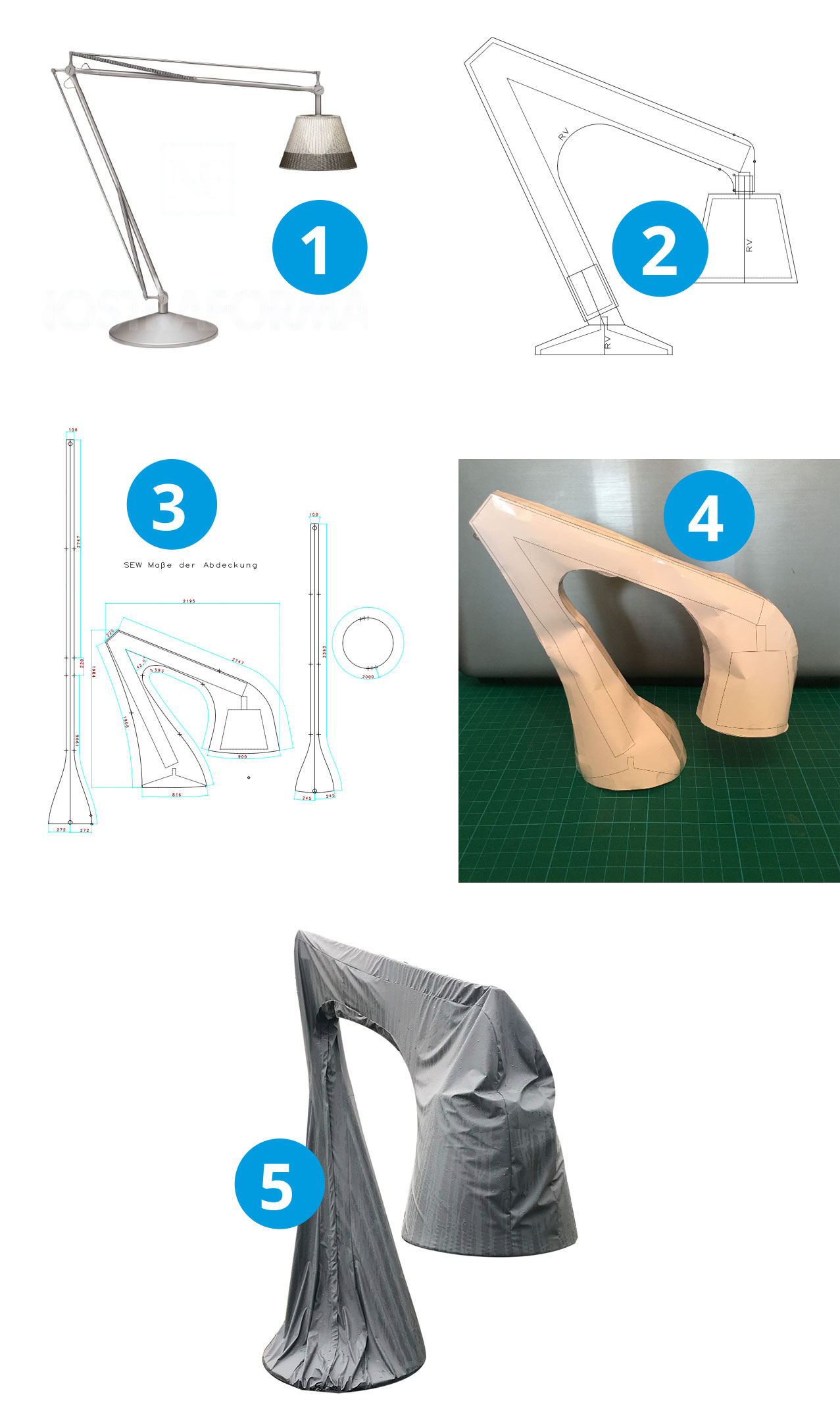
Auch komplexe Formen können maßangefertigt werden. Der Vorlauf ist hier ein bißchen länger, da viele Dinge zu beachten sind. Hier an diesem Beispiel einer Designerleuchte haben wir das Prozedere einmal kurz dargestellt
Weitere wichtige Faktoren für Formstabilität
- Richtige Befestigung
- Ausreichender Abstand zum Boden
- Keine dauerhafte Spannung auf Stoff und Nähte
- Möbel trocken abdecken
- Gewährleistung des Wasserablaufes
Häufige Fragen zu formstabilen Abdeckungen
Was macht eine Abdeckung formstabil?
Eine passgenaue Schnittform, geeignetes Material und korrekte Befestigung.
Sind schwere Abdeckungen automatisch formstabil?
Nein, schwere Stoffe sind oft steif und können sogar mehr Wassersäcke bilden. Häufig sind diese auch nicht atmungsaktiv. So ist z.B. LKW Plane sehr langlebig aber überhaupt nicht atmungsaktiv. Schimmel ist hier bei bestimmten Möbeln schon fast vorprogrammiert.
Reicht eine Standardabdeckung aus?
Für einfache Möbel ja – bei komplexen Formen ist eine Maßanfertigung besser.
Warum flattern viele Abdeckungen im Wind?
Meist wegen Übergröße, schlechter Passform oder unzureichender Befestigung.
Ist Formstabilität bei Schnee wichtig?
Ja, sie verhindert Wasser- und Schneesäcke.
Welche Rolle spielt Elastizität?
Sie hilft, Spannungen auszugleichen, ohne Nähte zu überlasten.
Kann Formstabilität nachträglich verbessert werden?
Teilweise durch bessere Befestigung oder Nachjustieren der Abdeckung.
Wo finde ich formstabile Abdeckungen?
Im Sortiment von wettertuete.de – als Standardlösung oder Maßanfertigung.
Fazit
Formstabile Abdeckungen entstehen nicht durch Masse, sondern durch Passform und Materialqualität. Während Standardabdeckungen für einfache Möbel ausreichen können, bieten Maßanfertigungen die höchste Formstabilität und den besten Schutz – insbesondere bei großen oder besonderen Gartenmöbeln.