Dachform der Abdeckung – Flach vs. Spitz
Die Dachform einer Abdeckung spielt eine entscheidende Rolle für den Schutz von Gartenmöbeln. Besonders häufig stellt sich die Frage: flache Abdeckung oder spitze bzw. erhöhte Dachform? Beide Varianten haben ihre Vor- und Nachteile – abhängig von Möbeltyp, Standort und Witterung.
Warum die Dachform wichtig ist
- Beeinflusst den Wasserablauf bei Regen
- Reduziert oder begünstigt Wasseransammlungen
- Wirkt sich auf Luftzirkulation und Trocknung aus
- Bestimmt die Stabilität bei Dauerregen
- Relevant für die Lebensdauer der Möbel
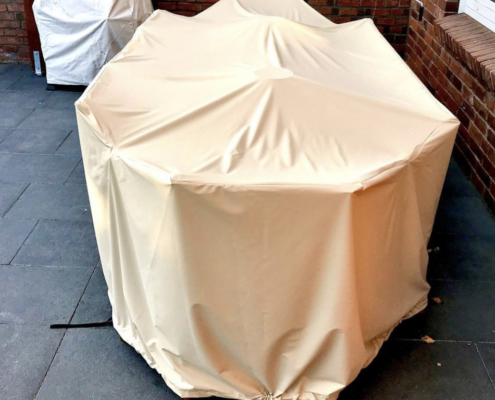
Diese Abdeckung wurde für eine Sitzgruppe mit 4 Stühlen und einer Bank nach Maß von Wettertuete.de gefertigt. Passgenau nach Skizzenvorlage. Hier hat der Kunde zusätzlich noch was zwischen Wettertuete und Tisch gestellt um einen besseren Wasserablauf zu gewährleisten
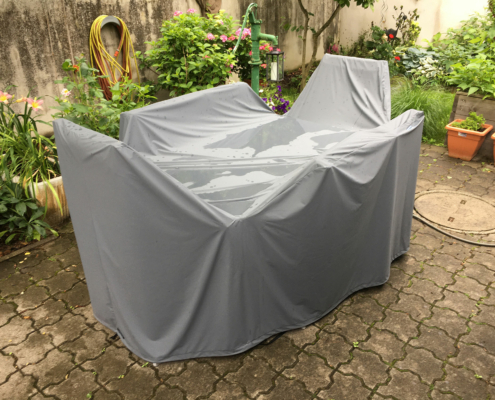
Tischgruppenabdeckung oder auch Sitzgruppenabdeckung nach Maß. Hier sieht man das das Wasser aufgrund der Passform auch ohne Dachform oder Gegenstände auf dem Tisch gut abläuft.
Flache Abdeckungen – Eigenschaften
- Schlichtes, dezentes Erscheinungsbild
- Geeignet für geschützte Standorte
- Funktioniert gut bei atmungsaktiven Abdeckungen
- Voraussetzung: ausreichender Abstand zum Boden
- Bei großen Flächen ggf. Wasseransammlungen möglich
Spitze Abdeckungen – Eigenschaften
- Fördern den Wasserablauf bei starkem Regen
- Reduzieren Staunässe auf großen Flächen
- Besonders sinnvoll bei Sitzgruppenabdeckungen
- Mehr Volumen unter der Abdeckung
- Optisch auffälliger als flache Varianten
Vergleich: Flache vs. spitze Dachform
| Kriterium | Flache Abdeckung | Spitze Abdeckung |
|---|---|---|
| Wasserablauf | Eingeschränkt bei großen Flächen | Sehr gut, Wasser läuft seitlich ab |
| Staunässe | Möglich ohne Gefälle | Kaum vorhanden |
| Optik | Dezent & unauffällig | Markanter & funktional |
| Luftzirkulation | Gut bei ausreichendem Abstand | Sehr gut durch Volumen |
| Einsatzbereich | Kleinere Möbel, geschützte Bereiche | Große Möbel, freie Standorte |
Welche Dachform ist die richtige?
- Flach: bei kleinen Möbeln, Balkonen & geschützten Terrassen und nicht anfälligen Möbeln aus Volledelstahl, Aluminium oder PVC.
- Spitz: bei Sitzgruppenabdeckungen, die nicht nach Maß gefertigt werden und wo die Stühle höher sind als der Tisch. Weil hier ansonsten eine große Wasseransammlung zu hohe Kräfte auf die Nähte ausübt (Wir nennen das auch Schweinebauch).
- Bei Sonderformen: Maßanfertigung empfehlenswert
(Abdeckungen nach Maß) - Maße korrekt ermitteln
(Abmessungen richtig messen)
Hilfreiche Links aus dem Abdeckung-Lexikon
Häufige Fragen zur Dachform von Abdeckungen
Ist eine spitze Abdeckung immer besser?
Nicht zwingend. Sie bietet Vorteile beim Wasserablauf, ist aber nicht in jeder Situation notwendig.
Kann sich auf flachen Abdeckungen Wasser sammeln?
Ja, insbesondere bei großen Flächen ohne Gefälle kann es zu Wasseransammlungen kommen.
Reichen atmungsaktive Abdeckungen auch bei flacher Dachform?
Ja, wenn ausreichend Luftzirkulation gegeben ist und kein Wasser dauerhaft stehen bleibt. Auf jeden Fall sollte, gerade bei Holztischen, ausreichend Abstand zum Boden eingehalten werden.
Welche Dachform ist für Gartentische sinnvoll?
Für Sitzgruppenabdeckungen wo die Stühle höher sind als der Tisch ist eine spitze oder leicht erhöhte Dachform meist sinnvoller. Nutzen Sie hier am Besten einen Ball oder einen umgedrehten Eimer den Sie dann auf den Tisch stellen zur Erhöhung.
Gibt es individuelle Lösungen?
Ja, bei Wettertüte sind auch individuelle Lösungen als Maßanfertigung möglich.
Fazit
Ob flach oder spitz – die richtige Dachform der Abdeckung hängt von Möbelgröße, Standort und Witterung ab. Mit der passenden Lösung lassen sich Wasseransammlungen vermeiden und Gartenmöbel langfristig schützen. Häufig empfehlen wir eine Ball oder einen umgedrehten Eimer zur Hilfe zu nehmen, wenn das Wasser nicht richtig abläuft. Das klappt auch schon gut.