Extreme Wetter-Abdeckungen – Schutz bei Sturm, Frost & Schnee
Storms, frost, and snow pose particular challenges for garden furniture. So-called extreme weather covers are designed to protect furniture even in adverse conditions—but the key is not to use the thickest possible material, but rather the right combination of material, fit, and fastenings.
Which extreme weather conditions are particularly critical?
- Storm: High wind load, suction effect, fluttering
- Frost: Material embrittlement, stress cracks
- Snow: Weight load, standing moisture
What a cover must be able to do in extreme weather conditions
- Secure fastening even in strong winds
- Sufficient distance from the floor for air circulation
- No permanent tension on fabric and seams
- Water drainage instead of water accumulation
- Material that remains flexible even in cold temperatures
More on this in the encyclopedia article
Fastening systems – cord, elastic, closures
Comparison: "Extreme weather coverage" vs. well-designed coverage
| criterion | Very heavy/rigid covers | Well-designed covers (wettertuete.de) |
|---|---|---|
| wind susceptibility | High vulnerability | Better fit, less sail effect |
| frost behavior | Material becomes stiff or brittle | Remains more flexible thanks to slight stretch |
| snow load | Water and snow bags available | Drainage thanks to a good fit |
| Kondenswasser | High risk | Reduced through breathability |
| Handhabung | Heavy & impractical | Lightweight & simple |
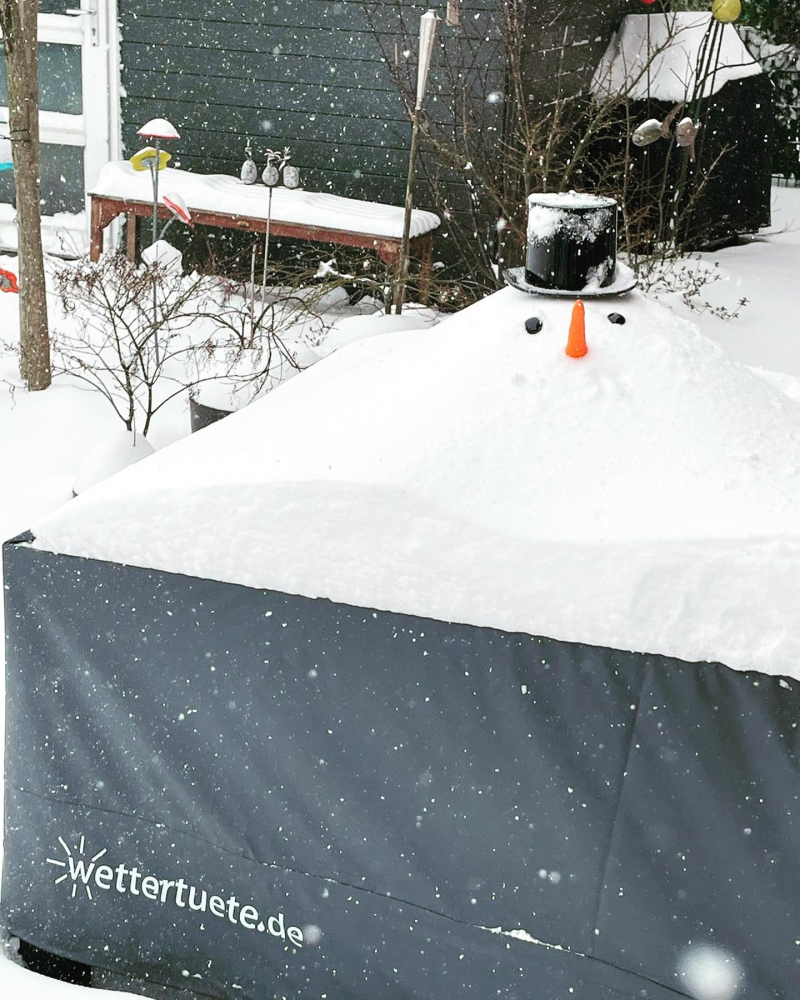
Frost-proof cover from wettertuete.de
Storm: Why fastening is more important than material thickness
In stormy weather, it is not the weight of the cover that matters, but how securely it is fastened. Loose or poorly secured covers act like a sail and can be damaged or damage furniture. That is why our loops for the fastening straps on the covers are sewn particularly strongly. Nevertheless, our recommendation for announced storms is clear: the Wettertuete furniture should not be left outside. Winds that can uproot trees will not stop at furniture or our covers.
Frost and snow – less tension, more protection
- Do not tighten covers too tightly
- Carefully remove snow regularly
- Cover furniture with a dry cloth
- Ensure sufficient air circulation
Read here to find out why air circulation is crucial:
Breathability of covers
Customization for extreme conditions
Custom-made covers are particularly useful for exposed locations or unusual furniture. They fit better, prevent flapping, and ensure controlled water drainage.
Frequently asked questions about extreme weather covers
Are special extreme weather covers necessary?
Usually not. The key factors are a good fit, secure fastening, and breathable material.
Can covers withstand storms?
It depends on the wind load you are exposed to and how sheltered (e.g., in a corner) they are. In any case, they should be properly secured and not act like a sail. In strong storms, covers and furniture should always be stowed away safely.
What is particularly important in snowy conditions?
Snow should be removed regularly to prevent pressure and water pockets.
Can frost damage covers?
Yes, rigid materials can become brittle in cold weather and crack. Since we have a very soft material, it is frost-resistant.
Why are very heavy covers not automatically better?
They are often rigid, susceptible to wind, and promote condensation.
Is breathability sufficient in continuous rain?
Yes, if the furniture is covered when dry and there is sufficient air circulation.
Should covers be removed in winter?
No, a professionally installed cover provides reliable protection even in winter.
When does customization make sense?
For very large, complex furniture or highly exposed locations.
Conclusion
Extreme weather conditions do not require extremely heavy covers, but rather well-thought-out solutions. The decisive factors are fit, fastening, breathability, and correct application—this ensures that garden furniture remains optimally protected even in storms, frost, and snow.